 Home
Home


Odoo’s Spanish subsidiary has grown by nearly 50% a year since 2022, above the Belgian group’s average, and it has created 350 jobs.
Tech unicorn Odoo, soon to become a decacorn with a valuation exceeding US$10 billion, is a Belgian business management software platform that has featured more than 85 open-source business applications since 2002. These are designed to meet every business need: from invoicing modules to accounting, inventory management, time and attendance, and website creation. Flexible and easy to use, it adapts to any sector or business, helping to boost efficiency.
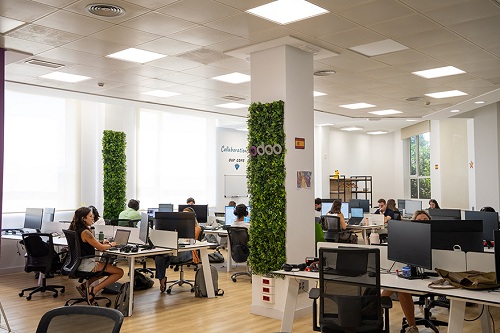
Four years after opening its Spanish office in Valencia, Odoo works with more than 500 partners and now has over 300 direct employees in Spain, a figure that continues to rise as it recruits around ten people a month, with the goal of reaching 350 by the end of this year. With roles spanning marketing, engineering and administration, the company believes in nurturing young talent and offers a wealth of opportunities to recent graduates.
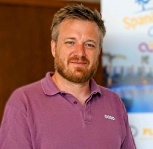
How has Odoo evolved in Spain over the past three years?
Our progress has been very strong, and the figures speak for themselves: since opening in September 2022, we have grown from one employee to more than 300 and from 2,000 customers to 14,500, while more than quadrupling our recurring revenue and achieving annual growth of close to 50%. And we have done so profitably, with an EBITDA margin of 27.5%. Growing fast is easy; growing fast while remaining profitable is not. Spain was a natural market for Odoo, with a business landscape dominated by SMEs, the precise segment in which we are strongest. We did not set ourselves a numerical target when we opened: our goal was to expand the brand and, over time, become the benchmark in the market.
The figure of €1 billion in revenue is expected to be reached in 2027. How is the Spanish office helping to achieve that goal?
Our contribution has two dimensions. The first is financial: today, we contribute around 3.5% of the group’s revenue, but it is not the snapshot that matters, but how the story unfolds over time. Spain is growing at close to 50% a year, outpacing the group average, and our contribution within Odoo is thus becoming increasingly significant. With such an ambitious target, contributing an ever-growing share is precisely how a subsidiary adds value. The second is less visible: we do not see ourselves merely as a revenue-generating unit, but as a benchmark for processes, methodology and workplace culture. We aim for our approach to execution to serve as a benchmark for the other subsidiaries in the group.
Your employees come from a wide range of professional backgrounds. What work does Odoo’s Spanish office carry out?
The Spanish office is a fully fledged operation, not merely a sales branch. We have three main areas, all equally essential: sales (direct and indirect sales through partners, including pre-sales and after-sales); services (consultancy, support and project delivery); and corporate functions (marketing, human resources and administration). We do develop tools, but with one caveat. The core product is developed in Belgium (R&D). In Spain, we have our own team - a product owner and developers - focused on adapting the software to local tax and legal requirements, as well as bespoke development for client projects. We do not build the core product, but we do adapt and extend it to meet each client’s specific needs.
The figure of 350 employees is expected to be reached by the end of the year. What is the longer-term outlook?
We do not set a fixed headcount ceiling, because our recruitment is driven by genuine market demand, not an imposed target. That said, if the market continues to perform as it has so far, reaching around 750 employees is entirely achievable over the next few years. As long as Odoo continues to expand in Spain and there are projects to deliver, we will continue to bring in new talent. We prefer to grow at a pace that is justified by demand - sustainably and profitably - rather than setting an ambitious target and then forcing growth to meet it.
Do you plan to open any new offices in Spain?
No, we have no plans to open any other offices. Our entire operation is centralised in Valencia, from where we serve customers across Spain. It is a deliberate decision: people are our greatest asset, so when choosing where to be based, the question was not about logistics, but about talent. Valencia gives us that response better than almost any other city. It offers what I call an ‘emotional salary’: living in a city with an exceptional quality of life while enjoying a truly fulfilling job. That combination offers a genuine competitive edge in attracting and retaining talent, including young talent, with plenty of opportunities for recent graduates.
You work with more than 500 partners in Spain. How does that relationship work, and what does having them on board mean for Odoo?
Our partner network is absolutely essential. These companies implement Odoo, provide support and assist customers with their day-to-day operations, enabling us to reach sectors, business sizes and regions that we cannot always serve directly. It is a two-way relationship: we provide the product, training and certification; they bring close customer relationships, customer knowledge and local delivery. They do not replace our in-house team; they complement it. In Spain, there is an additional factor: many of these partners have been working with Odoo for more than 15 years, long before we established our own subsidiary. When we arrived in 2022, the market already knew us and trusted the product, and that pre-existing ecosystem was one of the reasons we took off so quickly. They are not just a number: they are the foundation underpinning the brand’s entire expansion.
What does your customer base look like, and how does Odoo help them manage their day-to-day operations?
Our customer base is highly diverse: we serve everyone from self-employed professionals and micro-enterprises to major corporations, across virtually every sector, and with a particularly strong presence in retail, manufacturing and services. Integration is the key. A typical company has its information spread across multiple tools: invoicing software, one spreadsheet for stock, another for CRM, and a separate online shop… Odoo brings every aspect of management - sales, inventory, accounting, CRM and e-commerce - together in a single modular platform, enabling businesses to start with what they need and scale without the complexity of a traditional ERP system. Today, this is more important than ever because AI only delivers value when it is underpinned by clean, unified data. Even the best AI tool is useless if your data is scattered across ten different places. Odoo provides a single source of structured, auditable data, which is key to tax compliance and a solid foundation for AI to work effectively. This eliminates manual tasks, reduces errors and enables business owners to make decisions based on real data, so they can focus on growing their business.
What are the next challenges facing you in our country?
Our main challenges are those faced by any fast-growing company, and that is how I prefer to see them: challenges we choose to take on. The first one is scaling the team without losing our culture. We will continue to expand our workforce significantly, and the challenge is not to hire more people, but to do so while preserving our way of working, our high standards and that ‘emotional salary’. The second one is sustaining our pace of growth as we scale: growing by 50% a year from a small base is one thing; maintaining high growth rates once you are a large company is much harder, and that is what separates businesses that establish themselves from those that stagnate. And the third one relates to the market. Spain is undergoing a mandatory digital transformation: over the coming years, the new e-invoicing regulations and systems that are verifiable by the Spanish Tax Agency will compel virtually the entire business community to digitise its operations using approved, traceable and auditable software. This is creating huge demand, and our challenge is to rise to the occasion: supporting thousands of SMEs through this transition with the capacity and standard of service they deserve.
Photos: Odoo