 Home
Home
Osmond Resources confirms Jaén rare-earth mine viability


Once production begins, it will become the EU’s first rare earths producer.
Mining company Osmond Resources has reported promising data from the initial resource estimate for the Orión Critical Minerals project, located in the province of Jaén, and through which it aims to become the EU’s first producer of monazite (rare earths), zircon (zirconium/hafnium) and titanium minerals. The initial mineral resource estimate and scoping review will be published in the third quarter of this year.
The Australian company, which specialises in developing critical minerals projects in the EU, expects the high levels of valuable magnetic rare-earth elements to have a significant impact on the estimated basket price and the project’s profitability.
The heavy mineral and quartz contents are very similar. The mineralisation contains zircon, rutile, ilmenite and monazite, with traces of xenotime and allanite contributing to the rare-earth mineral composition. Economically viable minerals are relatively fine grained.
Heavy mineral concentrations
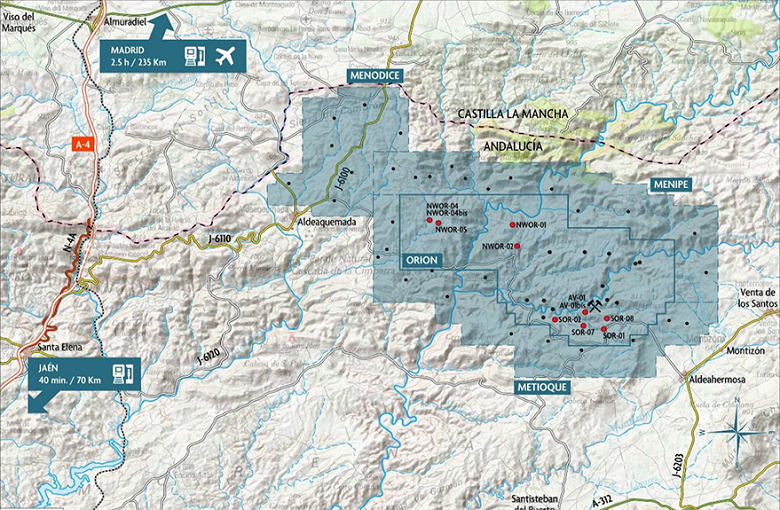
The critical minerals project covers an area of 232 square kilometres. It is a siliciclastic geological system with several layers rich in heavy minerals, and heavy mineral concentrations of over 30% have in fact been recorded. Mine planning will initially focus on the thicker zones of the main layer.
In the petrographic study conducted by the University of Oviedo on the main layer in Zone 1, four outcrop samples revealed low, moderate and high heavy-mineral grades, while two drill-core samples showed moderate and high grades. The study was designed to assess whether surface conditions had significantly altered the outcrop material.
Processing Areas
The processing area will comprise four main areas: the first for raw ore crushing, coarse ore storage, primary grinding and dry storage; the second for desliming and gravity concentration, followed by zircon beneficiation using WHIMS (wet high-intensity magnetic separators), drying, high-tension roll separation and dry magnetic separation.
The third area will carry out WHIMS of titanium minerals, regrinding of magnetic minerals, regrinding of gravity tailings, WHIMS of monazite and monazite flotation, while the fourth will be dedicated to the flotation of mixed titanium minerals, product dewatering and drying, and tailings dewatering for filter-cake backfill.
The area had already been explored for thorium and uranium in the 1950s and 1960s and includes a historic galena mine that was worked in the 1970s. The company also owns 100% of the Iberian One project, located in the province of Segovia, which it is currently assessing with a view to mining the kaolinite and alunite mineralisation.
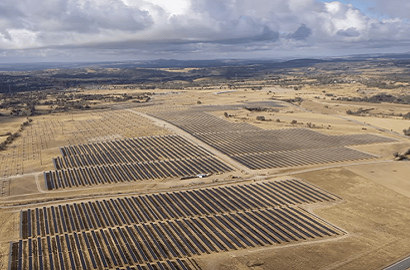
Photo: Osmond Resources