 Home
Home
ArcelorMittal consolidates Sestao plant green transition


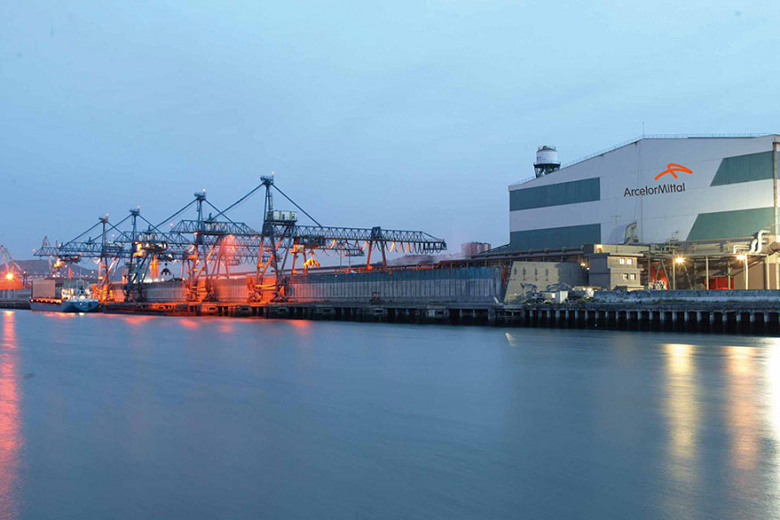
It has invested €150 million over the past four years, and its workforce has grown by 72%.
ArcelorMittal’s plant in Sestao has become a benchmark for sustainable industrial development thanks to the conversion project launched by the company in 2022 to produce steel with low carbon emissions. Over the past four years, it has received €150 million in investment, which will enable it to return to its maximum production capacity, set at 1.6 million tonnes per year.
The plant’s growth is driven by a strategic plan to make it a European benchmark in green steel production. Investment since 2022 has been channelled into projects such as upgrading the electric furnace, automating the rolling mill and installing a new steelworks filter, which will allow the two lines to operate in parallel and will meet future changes to environmental legislation. A degasser has also been installed, which is essential for accessing high value-added markets such as the automotive industry.
Job creation
Another outcome of the strategic plan has been the creation of jobs. The Sestao plant’s own workforce has grown by 72%, from the 200 employees it had in 2022 to the nearly 380 it has today. In addition to these, there are more than 220 workers from ancillary companies, generating an impact that the company estimates at around 3000 indirect jobs.
The plant uses electric arc furnace (EAF) technology to produce low-emissions steel. In addition, it uses a high proportion of recycled scrap as a raw material, and 100% of the energy it uses comes from renewable sources. The result is high-quality steel with a carbon footprint that is 65% lower than that of conventional steel and one of the lowest in Europe.
Sustainability objectives
The investment plan set out in the original roadmap for ArcelorMittal’s project in Sestao totalled 200 million euros, meaning that 50 million are still required to bring it to completion. For now, with the investment confirmed, the plant is already prepared to reach a production capacity of 1.6 million tonnes a year, a milestone not seen since 2008.
The remainder of the investment is contingent on how the market develops and on customers’ efforts to meet their sustainability targets. Demand for sustainable steel has grown, although only a handful of customers are still willing to shoulder the extra cost of sustainable steel. The company is counting on regulatory, energy, political and market developments to give it the boost it needs and make it the most sought-after option.
Pedro Escudero, CEO of ArcelorMittal Sestao, says that the Sestao plant is “a key element in ArcelorMittal’s decarbonisation strategy in Europe and in the development of our XCarb range of low-emission steels, so we cannot afford to miss the opportunity offered to us by the Group to include us among its strategic growth projects”.
Photo: ArcelorMittal