 Home
Home
Seat invests 300 million and opens Catalan battery assembly plant


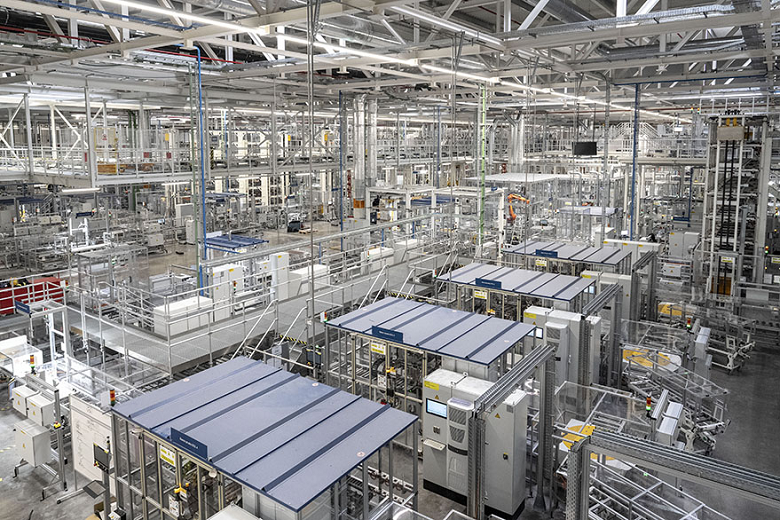
The first two 100% electric models from the Volkswagen Group will begin production at this factory in 2026.
The Seat and Cupra factory in Martorell (Barcelona) now has its own battery assembly plant, a milestone that the Volkswagen Group considers key in the final stretch of its transformation to electrification. The new facilities cover an area of 64,000 square metres and will be able to assemble one battery system every 45 seconds, which translates into 1,200 battery systems per day and 300,000 per year.
This initiative, led by the Spanish brand within the group, positions Spain as a hub for electromobility in Europe. The launch of this workshop is part of the Volkswagen Group's global battery strategy, which aims to balance internal supply with that from third parties to achieve maximum flexibility, while having permanent access to innovations, technologies and supply chains.
The company's electrification process is now preparing to take a new step forward, which will be made possible by the commissioning of these facilities. In 2026, mass production of the Cupra Raval and Volkswagen ID. Polo will begin in Martorell. Seat has also led the project for the family of urban electric cars to which both belong, for the Volkswagen Group's ‘brand group core’: four 100% electric models from three different brands, all manufactured in Spain.
The battery system assembly plant has been built in just over two years, with an investment of 300 million euros. For the time being, it will exclusively supply the production lines of the two new models that will begin production in 2026. The battery systems will be automatically transferred to the assembly workshop via a 600-metre bridge.
The building's roof has 11,000 solar panels that will provide 70% of the electricity needed for battery system assembly. The facilities also include a water collection system with a capacity equivalent to three Olympic swimming pools.
Epicentre of future mobility
Seat and Cupra CEO Markus Haupt said that Martorell is now ‘the epicentre of future mobility’ and that the opening of the workshop ‘is a turning point in the history of Seat and Cupra. Today we are seeing our ambition become a reality: we are ready to produce 100% electric cars made in Spain that will make electric mobility accessible throughout Europe.’
For his part, the chairman of the board of directors of Seat and Cupra, Thomas Schäfer, recalled that four years ago ‘we made a historic investment to make Spain a key location and European benchmark for electromobility. Today, with the opening of this battery system assembly plant in Martorell, we are starting a new chapter for the Volkswagen Group, for Spain and for Europe.’
The Head of the Group-wide Centre of Excellence for Battery Technology, Günther Mendl, believes that the company has gone ‘from being observers to becoming protagonists in the core technology of the electric world. The MEB+ battery system assembled in Martorell is fully competitive in all key aspects and represents a step forward with the introduction of the unified cell.’ The company has opted for lithium iron phosphate as an alternative chemistry and a compact design.
A five-year process
The launch of the battery workshop marks the end of a transformation process that began in 2020, and in which the Volkswagen Group has invested €10 billion in Spain. €3 billion of this amount has been allocated exclusively to the electrification of Martorell, which is consolidating its position as the group's third largest production plant in Europe.
Approximately 25% of the vehicles manufactured in Spain are produced at this plant. Its goal is to reach a maximum capacity of 600,000 units per year, up to half of which could be electric vehicles (BEVs) in the future.
Photo: Seat