 Home
Home
Veolia opens Zaragoza composting and biomass plant


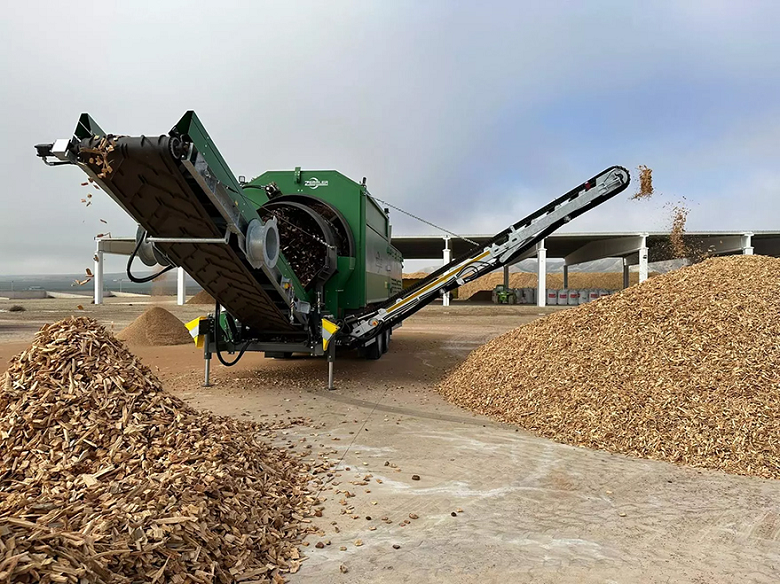
With the capacity to process more than 50,000 tonnes a year, it recovers organic waste and produces solid biofuels.
French company Veolia, which specialises in decarbonisation, the circular economy and optimised resource management, and its biomass-specialist subsidiary, Veolia Biomasa, have opened a composting and biomass plant in Fuentes de Ebro (Zaragoza). In total, it has the capacity to convert more than 50,000 tonnes per year, including sewage sludge and local biomass from rural residues, into compost for agricultural use and clean energy for industry.
The new facility is designed to operate in two complementary areas. The first is the composting of organic waste, with the capacity to handle 27,000 tonnes per year. It also has two separate treatment lines: one for sewage sludge suitable for agricultural use, and another for waste intended for fertiliser production.
Natural solid fuels
The second line is a platform for processing forestry and agricultural residues for energy recovery. With the capacity to process 15,000 tonnes a year, the system sorts and shreds the material to produce natural, efficient and sustainable solid fuels in the form of wood chips and pellets, intended for industrial boilers and heating networks.
The director of Veolia Biomasa, Miguel Ruiz-Gálvez, explained, “This facility is a demonstration of Veolia’s GreenUp strategy, based on accelerating ecological transformation through integrated water, energy and waste solutions. We are committed to models capable of generating value from local resources, while also driving the circular economy and the decarbonisation of the region”.
For the company, this initiative not only makes it possible to obtain new resources from what was previously discarded, but it also promotes a sustainable cycle that creates local jobs, reduces dependence on traditional fossil fuels and enables the region’s industry and heating systems to operate much more cleanly.
Photo: Veolia