 Home
Home


Danone has invested EUR 60 million in its Aldaya hub over the past five years and has announced a further EUR 40 million for its Tres Cantos hub.
Danone began life in Barcelona in 1919 when Isaac Carasso started making yoghurt, convinced that nutrition could play a fundamental role in people’s health. More than a century later, the French company is one of the world’s leading food and drink companies, with a presence in more than 120 countries.
Today, Danone remains true to the same mission that inspired its beginnings: to bring health through food to as many people as possible. It is a purpose that drives its commitment to innovation, research and the development of new solutions capable of addressing the food challenges of today and tomorrow.
In Spain, where it has maintained a strong presence throughout its history, it leads all four categories in which it operates: dairy products, plant-based alternatives, specialised nutrition and natural mineral water. From Spain, it develops science-backed solutions tailored to consumers’ diverse nutritional needs.
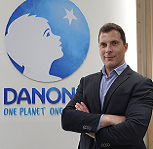
You could say that Danone is Spanish, at least in terms of its origins. What does Spain mean to the company?
As well as being our country of origin, Spain is one of the most strategically important countries for Danone worldwide and one of the company’s main drivers of innovation. We have a strong industrial base, internationally recognised R&D centres and leading brands with a strong connection to consumers. From Spain, we drive projects that are key to Danone’s future and are subsequently rolled out in other markets. That is why Spain is more than just an important market; it holds a leading position at Danone thanks to its ability to drive innovation, develop new categories and accelerate the company’s transformation.
Your first yoghurt was created in Barcelona, and you still carry out R&D in Spain today. How much does Danone invest in R&D in Spain?
In Spain alone, Danone invests around EUR 13 million a year in R&D. This investment is supported by internationally recognised research and innovation centres in Barcelona and Madrid where we develop new science-backed solutions and help drive strategic projects for the company. This investment is also supported by a global research network of more than 2000 scientists, placing scientific knowledge at the heart of our strategy.
What are the main results of that R&D work in Spain?
The main contribution of Spanish R&D is to help us lead the categories that are transforming the market and build an even healthier and more distinctive portfolio. Spain is one of Danone’s main innovation hubs for southern Europe, and each year we launch around 50 new products, these being a combination of science, technology and consumer insight. A good example is our work on protein in Tres Cantos (Madrid), where we have developed proprietary technologies for high-protein yoghurts and continue to drive the growth of brands such as YoPro. This is complemented by our expertise in fermentation cultures and probiotics, and is a distinctive strength that enables us to maintain our leadership in categories such as digestive health. We are able to do so thanks to pioneering innovations such as Activia Kéfir, the only Aenor-certified kefir on the market with genuine yeasts.
The most recent hub you opened was the science hub in Tres Cantos. What work do you carry out at these centres?
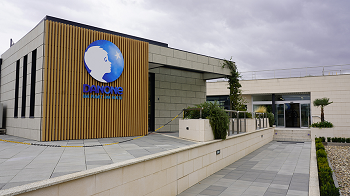
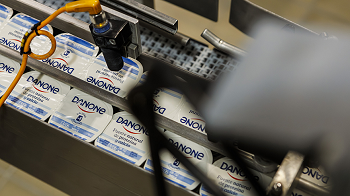
In Spain, we have three centres that play a key role in Danone’s global innovation network. Our innovation hub in Aldaya (Valencia) has established itself as a benchmark for operational efficiency and industrial transformation. Its defining feature is that it brings packaging manufacturing, production and distribution together on a single site. This connects processes, increases agility and facilitates a shift towards more efficient models. Products from brands such as Activia, Actimel, YoPro and Danacol are made there, and more than 180 innovation projects are carried out each year. The latest hub we have opened is the science hub in Tres Cantos (Madrid). This is a unique centre that combines production capabilities with world-class scientific research through the International Centre for Technological Innovation. Its mission is to turn scientific knowledge into innovative products that reach consumers quickly and effectively. Finally, Barcelona is home to the Isaac Carasso R&D centre, which specialises in developing new products and technologies. Its facilities include a pilot plant, a fermentation cultures laboratory and another dedicated to packaging. This strengthens capabilities that have historically set Danone apart, such as research into fermentation and digestive health.
What are the most important investments you have made in Spain?
Our investments in Spain reflect a long-term vision: to build an industrial, scientific and technological model equipped to drive Danone’s future growth. In total, we allocate around EUR 120 million a year to research, development and innovation (R&D+i), infrastructure and brand development. One outstanding aspect of this is the investment of more than EUR 60 million over the past five years in the Aldaya innovation hub, which is a facility that is key to our evolution towards a more connected, efficient and competitive industrial model. Added to this is the recently announced investment of nearly EUR 40 million in the Tres Cantos science hub, which will facilitate the creation of a new production line at the plant, and with the aim of strengthening Danone’s growth and leadership in key health-related areas. We have at the same time allocated EUR 20 million to digitalisation to introduce artificial intelligence and advanced data analytics capabilities that will help us optimise operations, improve decision-making and respond more swiftly to consumer needs.
How many employees do you have in Spain?
We currently have around 1,200 employees in Spain working across our plants, research and innovation centres and offices. But our impact goes much further. The activity we generate throughout the value chain helps sustain around 15,000 direct, indirect and induced jobs in Spain, alongside an extensive network of livestock farmers, suppliers, distributors and partners.
What are the next challenges you face?
The main challenge will be to continue anticipating the trends that are transforming the way we eat and consolidate our leadership in the categories with the greatest growth potential. 95% of Danone’s growth in Spain today does in fact come from categories that were far less prominent in the market just five years ago, such as protein, plant-based products, kefir, Greek yoghurt and solutions targeting cholesterol. This demonstrates our ability to identify emerging trends and turn them into drivers of growth. Our challenge now is to continue identifying shifts in the way we eat before anyone else and to lead the categories that will shape the sector’s future. Innovation will remain our main driver of growth in the coming years.
Photos: Danone